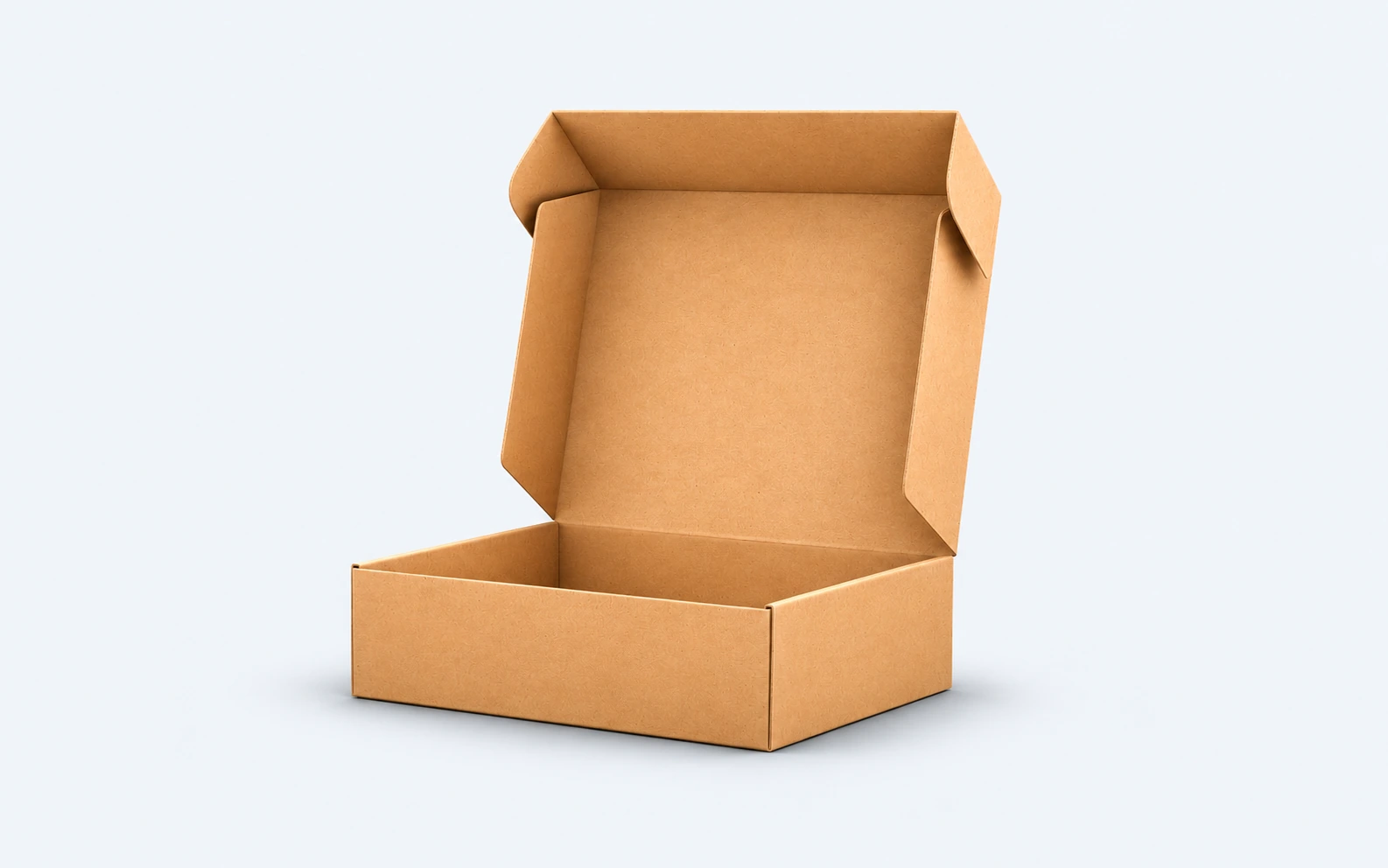
Tuck End Box Styles: Reverse, Straight and Lock Bottoms
A tuck end box is a paperboard folding carton that closes with flaps you tuck into the box at the top and bottom. It ships flat and pops open in seconds. The main styles are reverse tuck end, straight tuck end, and lock bottom boxes, which swap the bottom flap for a stronger base that holds heavier products.
You see tuck end boxes everywhere: on lipstick, vitamins, tea, soap and phone accessories. They are cheap to make, easy to pack and print well on every side. The hard part is picking the right style. Each one closes a little differently and carries a different amount of weight.
This guide explains each style in plain words and helps you match one to your product.
What is a tuck end box?
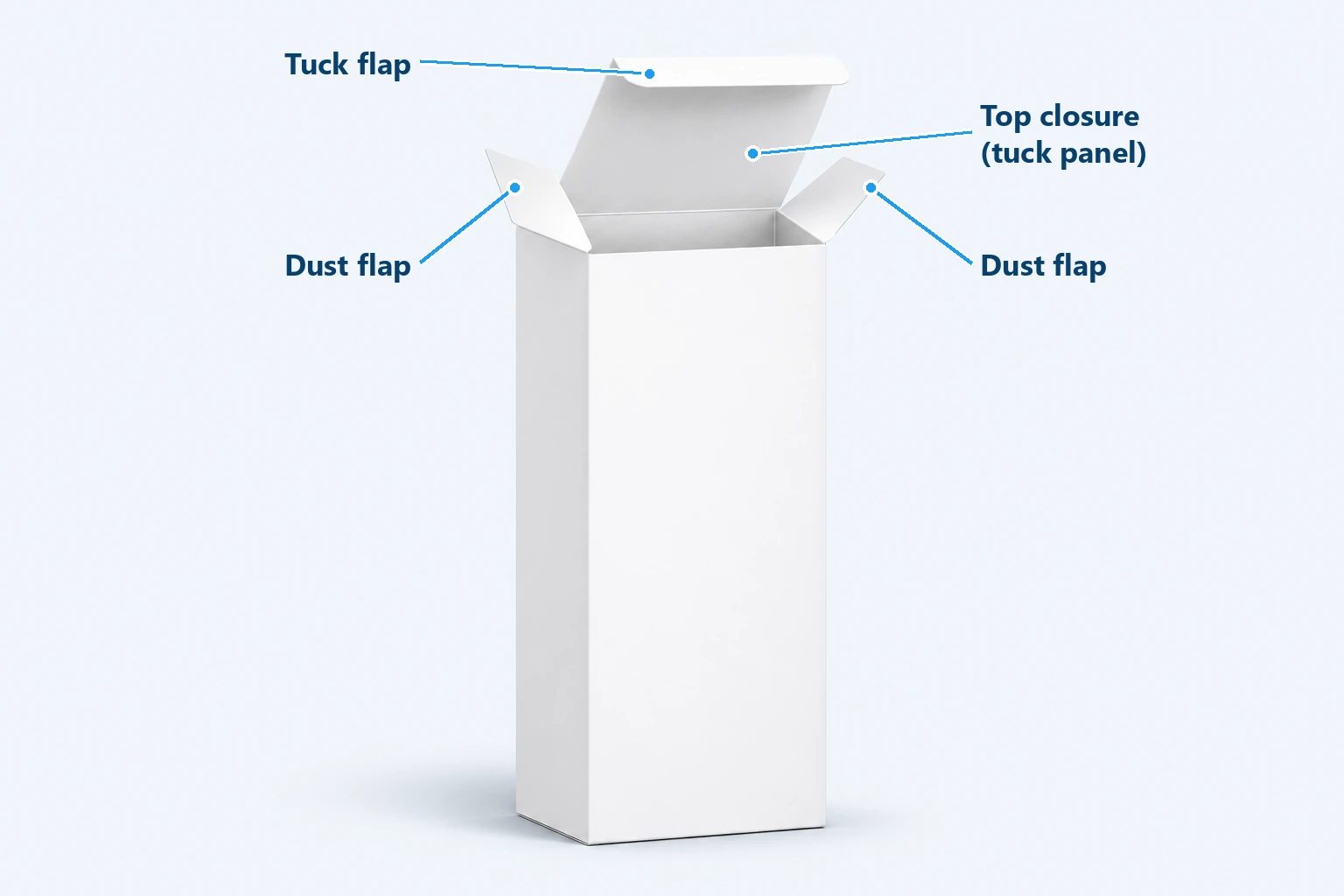
A tuck end box is a folding carton cut from one flat sheet of paperboard. At each end, a closure panel with a small tuck flap folds over and slides inside the box. Small side flaps, called dust flaps, fold in first and keep dust out of the gaps. No tape is needed to close it.
The tuck flap is the curved strip on the edge of each closure panel. Its rounded corners help it slide in and grip the side walls. The dust flaps also stiffen the ends, so the box keeps its square shape on the shelf.
Do tuck end boxes use glue?
Yes, in one place. The closures at the top and bottom need no glue or tape. But the box itself has one glued side seam. A narrow strip on the edge of the flat sheet is called the glue flap. At the factory, it is glued to the inside of the opposite panel. That turns the flat sheet into a tube.
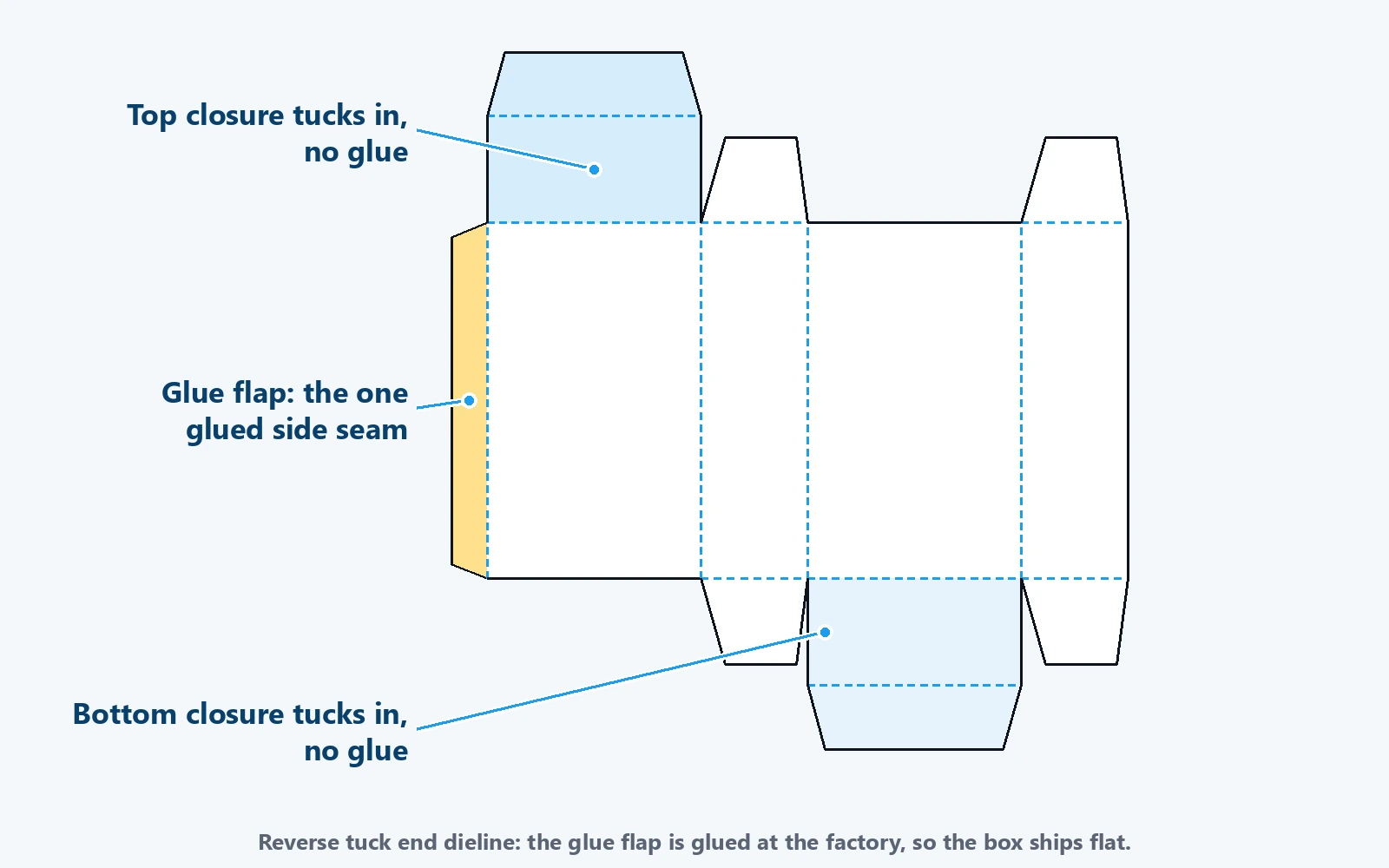
Thanks to that seam, the box arrives flat, stacks in a small space and pops open into shape. You only fold in the ends. If you ever see a tuck end box described as having “no glue at all,” it means the closures, not the seam.
What are the main tuck end box styles?
There are four main tuck end box styles. Reverse tuck end and straight tuck end boxes close with tuck flaps at both ends. Snap lock and auto-lock bottom boxes keep the tuck top but use interlocking flaps at the base. The styles differ in where the closures hinge, how much weight the bottom holds and how fast you can pack them.
| Style | How the top closes | How the bottom closes | Holds | Cost |
|---|---|---|---|---|
| Reverse tuck end (RTE) | Tuck flap, hinged on the back panel | Tuck flap, hinged on the front panel | Light products | Lowest |
| Straight tuck end (STE) | Tuck flap, hinged on the back panel | Tuck flap, also hinged on the back panel | Light products | Low |
| 1-2-3 snap lock bottom | Tuck flap | Four flaps fold and lock by hand, no glue | Medium weight | Medium |
| Auto-lock (crash-lock) bottom | Tuck flap | Pre-glued flaps lock flat as the box opens | Heavier products | Higher |
What is a reverse tuck end box?
A reverse tuck end (RTE) box, or reverse tuck box, is a folding carton with closures on two different panels. The top closure hinges on the back panel. The bottom closure hinges on the front panel. The two ends tuck in from opposite directions. It is the most common and lowest-cost tuck end style for light retail products.
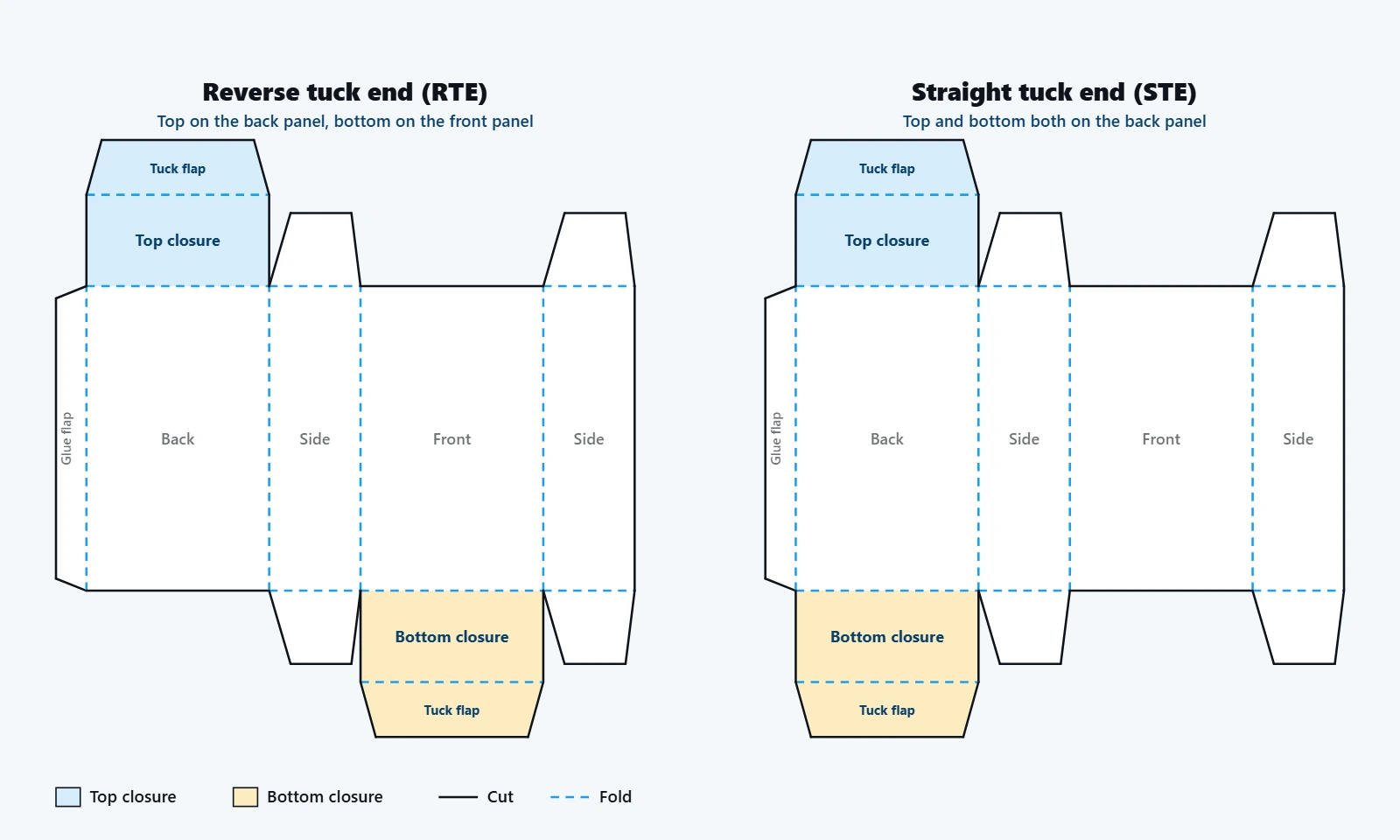
RTE is popular for small retail products because its flat layout nests neatly next to other boxes on a printing sheet. Less wasted board means a lower price per box. It suits light items such as cosmetics, tea, soap, small electronics and accessories. Read more about reverse tuck end boxes.
What is a straight tuck end box?
A straight tuck end (STE) box, or straight tuck box, is a folding carton with both closures on the back panel. Both ends tuck in from the same direction. Because no closure hangs from the front, the front panel stays one clean printed face, which suits windows and full-front designs.
Many brands choose STE for skincare with a window or for gift sets. It can use a little more board on the printing sheet than RTE, so it may cost slightly more at the same size. See our straight tuck end boxes.
Reverse tuck end vs straight tuck end: what’s the difference?
The difference between a reverse tuck end and a straight tuck end box is where the bottom closure hinges. On a reverse tuck end box, it hinges on the front panel, so the ends tuck in opposite directions. On a straight tuck end box, both closures hinge on the back panel, so both ends tuck in the same direction.
| Reverse tuck end (RTE) | Straight tuck end (STE) | |
|---|---|---|
| Bottom closure hinges on | Front panel | Back panel |
| Ends tuck in | Opposite directions | Same direction |
| Board use on the print sheet | Most efficient | Slightly more |
| Front panel | Edge meets the bottom flap | One clean face |
| Best for | Low-cost retail boxes in volume | Windows, full-front artwork, gift sets |
Quick way to tell them apart: open both ends. If the flaps swing out to opposite sides, it’s a reverse tuck end. If they swing out to the same side, it’s a straight tuck end.
What is the difference between a snap lock and an auto-lock bottom?
A 1-2-3 snap lock bottom has four flaps you fold and lock by hand, with no glue. An auto-lock bottom, also called an auto bottom or crash-lock bottom, is pre-glued at the factory. It snaps flat by itself when you open the box. Auto-lock is faster to pack and stronger. Snap lock costs less.
A plain tuck flap is fine for a lipstick, but a heavy jar can push it open. Lock bottoms fix that by replacing the bottom tuck with flaps that interlock.
- 1-2-3 snap lock bottom. Four bottom flaps fold in a set order and lock together. You fold the base by hand when you pack. It’s stronger than a tuck bottom and costs less than an auto-lock. Packlic makes snap lock bottom boxes.
- Auto-lock (crash-lock) bottom. The bottom flaps are glued at the factory. When you pop the box open, the base snaps flat on its own. It’s the fastest to pack and the strongest of the four, so it suits heavier products. The extra gluing adds a little cost. See auto lock boxes and crash lock bottom cartons.
The top of a lock bottom box still closes with a normal tuck flap. That’s why you’ll see it sold as a “tuck top auto bottom box.” Customers open it the same way as any tuck end box.
Which tuck end box style should you choose?
Choose a tuck end box style by product weight first. Light items under a few ounces suit reverse tuck end, the lowest-cost style. Pick straight tuck end for a window or full-front design. Choose a snap lock or auto-lock bottom for bottles, jars and anything heavy enough to push a tuck flap open.
| Product | Good style | Why |
|---|---|---|
| Lipstick, mascara, small skincare | Reverse tuck end | Light, low cost, quick to pack |
| Skincare with a window, gift sets | Straight tuck end | Front stays one clean printed face |
| Tea, soap, small accessories | Reverse tuck end | Light and sold in volume |
| Supplement bottles, glass droppers | Snap lock or auto-lock bottom | Base won’t push open under weight |
| Candles in glass jars | Auto-lock bottom | Strongest base, fastest to pack |
| Products packed by the thousand | Auto-lock bottom | Saves time on the packing line |
If your product is fragile or rattles, add an insert inside any of these styles. If it’s very heavy or needs to feel premium, a mailer box or rigid box may be a better fit than a folding carton.
Want a real example? The Vicious Grooming beard oil box is a 5 x 2 x 2 inch straight tuck end carton. A die-cut insert inside holds the 2 oz glass bottle so it doesn’t rattle.
What board should a tuck end box use?
Most tuck end boxes use paperboard between 8pt and 28pt thick. One point (pt) is one thousandth of an inch, so 18pt board is 0.018 inches thick. Light cartons for cosmetics and tea use about 8pt to 12pt. Lock bottoms and heavier products need about 16pt and up.
Thicker board feels stiffer and protects better, but it costs more. Your choice of board type also changes the look:
- White board (SBS) gives the brightest print colors.
- Kraft board has a natural brown look and suits eco-minded brands.
- Recycled board is a lower-cost option for everyday retail boxes.
Packlic stocks board from 8pt up to 28pt and builds crash-lock bases from 16pt upward. So the thickness can be matched to your product’s weight.
How do you measure a tuck end box?
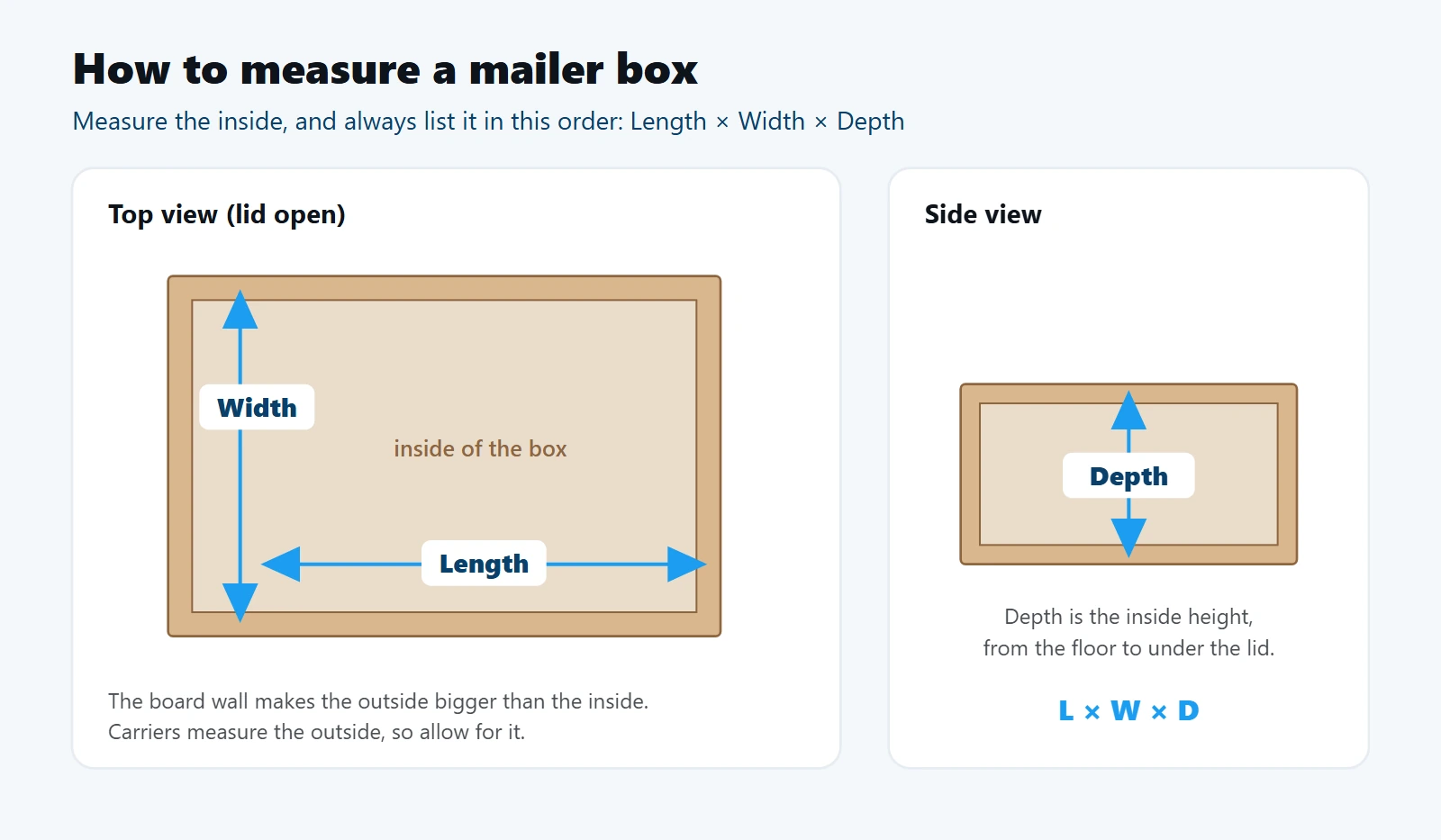
Tuck end box sizes are written as inside length × width × depth, in inches. Length and width are the two sides of the opening at the top. Depth is the distance from the opening down to the base. For example, a 5 x 2 x 2 inch box has a 5 by 2 inch opening and is 2 inches deep.
Measure your product at its widest points, then add a little room for an insert if you use one. Always tell your supplier whether your numbers are inside or outside sizes. The board’s thickness makes the outside slightly larger than the inside.
How do you get a tuck end box template?
A tuck end box template, or dieline, is the flat outline of the box before it’s folded. It shows cut lines, fold lines, the glue flap and the tuck flaps. Your box maker builds it to your exact size and style. You place your artwork on it so the print lines up with every panel after folding.
Free templates online are a good way to picture the layout. But a generic file may not match your board thickness or your supplier’s machines. At Packlic, our team prepares the dieline for your exact size, and you can see a free 3D mockup before production.
Can you mail a tuck end box?
You can mail a tuck end box, but it’s built for store shelves, not shipping on its own. Thin paperboard can crush or scuff in transit. Most brands pack the tuck end box inside a corrugated shipping box. For direct mailing, a corrugated tuck top mailer box or roll end tuck box is the safer choice.
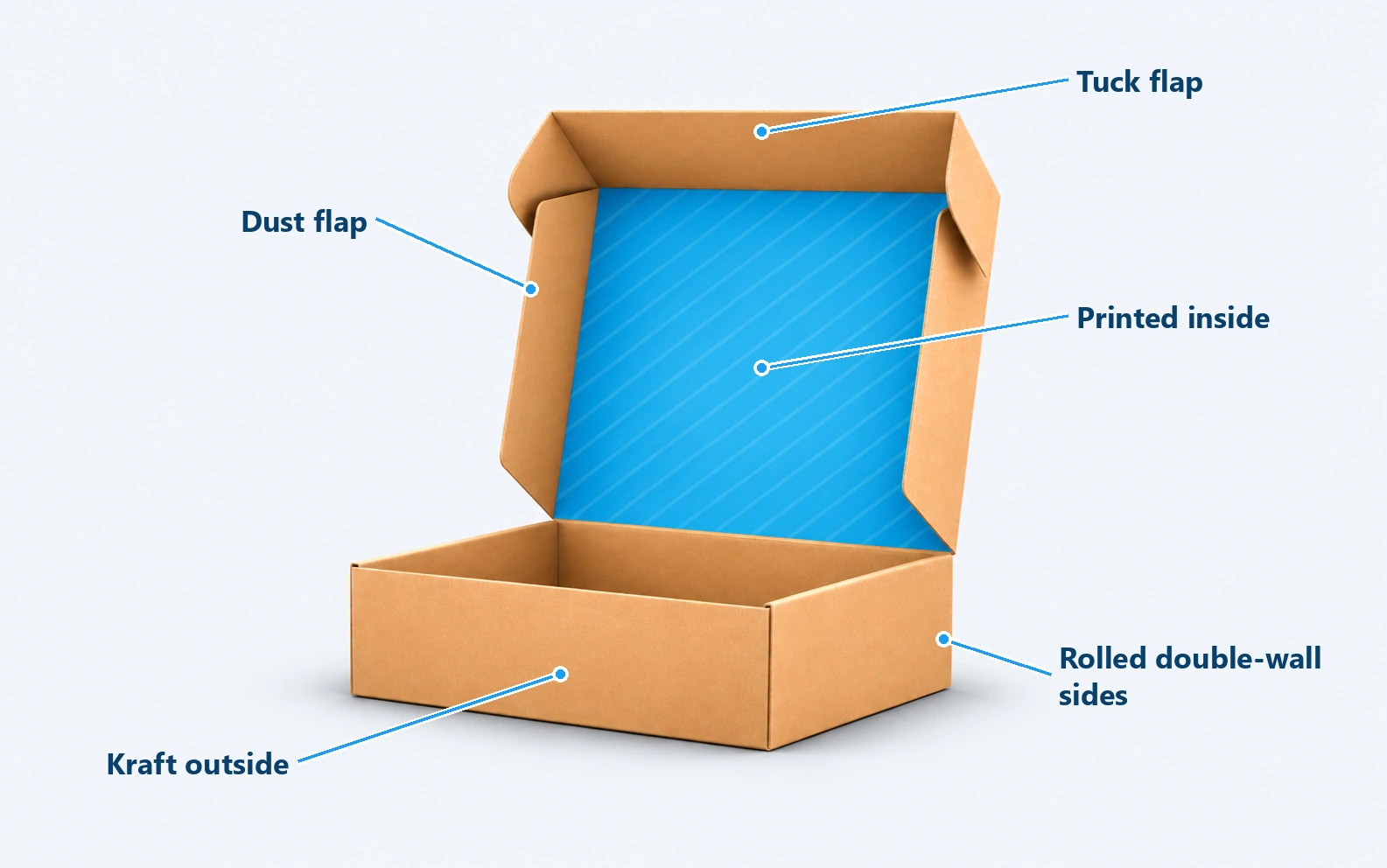
A roll end tuck box is a different box that uses a similar idea. It’s usually made from corrugated board, with sides that roll over into double walls and a lid that tucks in at the front. It is stronger than a paperboard tuck end carton, so it can go straight into the mail. See our roll end tuck boxes and tuck top mailer boxes.
What can you add to a tuck end box?
You can add a hang tab, a window, an insert, inside printing, a locking tuck flap or a special finish to any tuck end box style. Each add-on changes the dieline, so decide on them early. Most also add a small amount to the price per box, depending on size and quantity.
- Hang tab. A punched tab on top lets the box hang on a store peg. See five panel hanger cartons.
- Window. A die-cut opening, often with clear film, lets shoppers see the product. See window cartons.
- Insert. A paperboard insert holds a bottle or jar in place. See bottle product inserts.
- Locking tuck flap. Small slits hook the tuck flap in place, so the box stays shut after many openings.
- Inside print. Printing the inside of the box adds a small surprise when the customer opens it.
- Finishes. Matte or gloss coating, foil stamping and embossing make the box feel more premium.
Decide on add-ons before your artwork is finished, so the design lines up with the final shape.
Frequently asked questions
What are tuck end boxes used for?
Tuck end boxes are used for light retail products sold on a shelf. Common examples are cosmetics, skincare, tea, soap, vitamins, candles and small electronics. They ship flat, pack quickly and print on every panel.
What is the difference between a reverse and a straight tuck end box?
On a reverse tuck end box, the top closure hinges on the back panel and the bottom closure on the front panel. On a straight tuck end box, both closures hinge on the back panel.
Do tuck end boxes need glue?
The tuck end box closures don’t need glue or tape. The box has one glued side seam, made at the factory, so it ships flat and pops open into shape.
What is an auto bottom box?
An auto bottom box is a folding carton with a pre-glued base that locks flat by itself when the box is opened. It’s also called an auto-lock or crash-lock bottom box. It’s the strongest and fastest-to-pack tuck end style.
Is a 1-2-3 bottom the same as an auto-lock bottom?
No. A 1-2-3 snap lock bottom has no glue and is folded by hand. An auto-lock bottom is glued at the factory and forms itself when the box is opened.
What is the minimum order for custom tuck end boxes?
At Packlic, custom tuck end boxes start at 100 units, and the price per box drops as the quantity goes up.
Pick your style, then get a quote
For most light retail products, a reverse tuck end box is the simple, low-cost choice. Go straight tuck end for a window or a clean full-front design, and choose a lock bottom when the product has real weight. Browse all our custom tuck boxes or the wider range of folding cartons, then request a quote. Quotes come back within 24 hours, and you can see a free 3D mockup of your box before production.