Eco-Friendly Packaging: Materials, Examples and Costs

Eco-friendly packaging is packaging that does less harm to the planet. It is also called sustainable or environmentally friendly packaging. It is made from recycled or well-sourced material. After use, it can be recycled, composted or used again. For most brands, the simplest proven choice is paper: kraft board and recycled corrugated boxes.
What makes packaging eco-friendly?
Packaging is eco-friendly when it does well on three tests. It is made from recycled or responsibly sourced material. It uses no more material than the product needs. And after use, your customer can recycle it, compost it or reuse it where they live. A package that passes all three is green in a way you can prove.
No package is perfectly green. Every box uses material and energy. That’s why these three tests matter more than any label:
- What it’s made from. Recycled fiber, or wood from forests that are managed responsibly.
- How much of it you use. A box that fits the product uses less board and costs less to ship.
- What happens after. Can your customer recycle or compost it? And will it really get processed?
A package that only “looks natural” may not pass any of them.
Why is eco-friendly packaging important?
Packaging is one of the biggest sources of household waste. The US Environmental Protection Agency (EPA) tracks this. In 2018, containers and packaging made up 82.2 million tons of US waste. That was 28.1% of all the trash US homes and businesses threw out. Choosing packaging that gets recycled or composted keeps much of it out of landfills.
The benefits of eco-friendly packaging go beyond the planet:
- Less waste. Recyclable and compostable materials can be turned into something new.
- Lower shipping costs. Right-sized, lighter packaging often costs less to ship.
- Clearer brand trust. A specific, honest claim tells customers you mean it.
- Fewer surprises later. Rules on green claims keep getting stricter.
What’s the difference between recyclable, biodegradable and compostable?
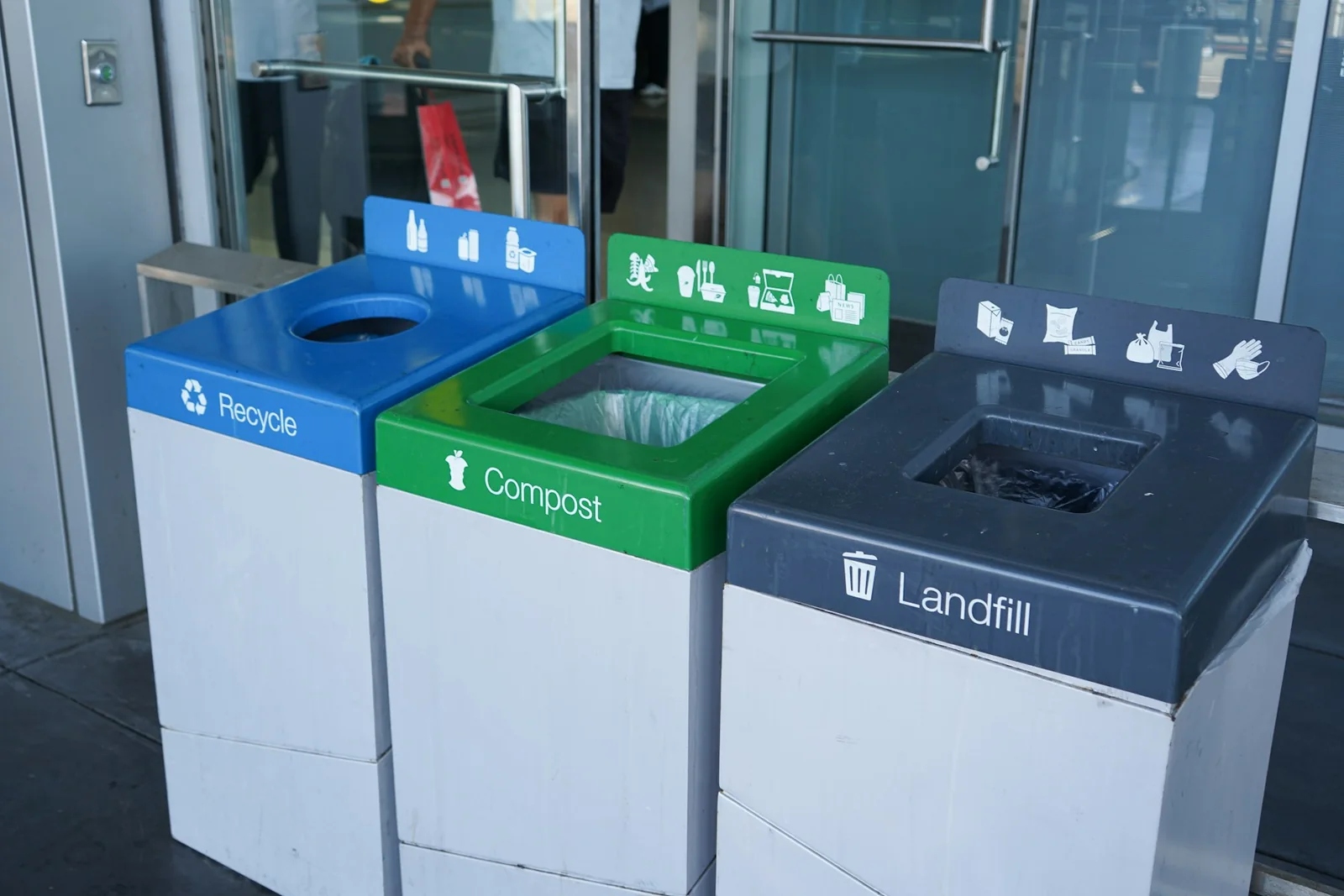
Recyclable packaging can be collected and made into new material, like cardboard. Biodegradable packaging breaks down naturally, but the word doesn’t say how fast or where. Compostable packaging turns into compost within a set time, at home or in an industrial facility. Recyclable and compostable tell customers what to do. Biodegradable alone usually doesn’t.
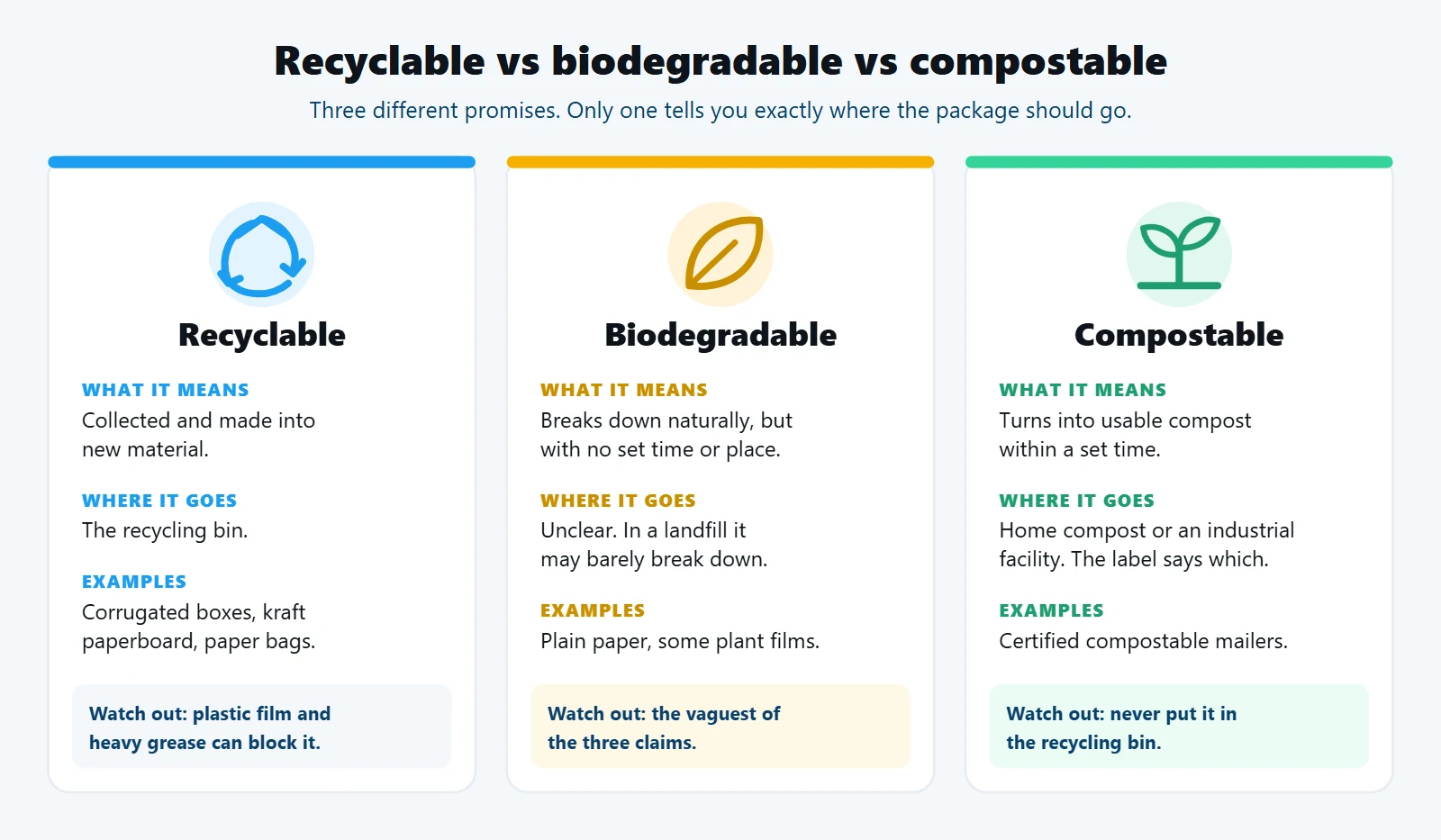
- Recyclable means the material can be collected and turned into new material. Cardboard boxes and paper bags are the classic examples.
- Biodegradable means it breaks down through natural processes. The US Federal Trade Commission (FTC) has a rule of thumb for this claim. A plain “biodegradable” label should only be used if the whole item breaks down within about a year. Landfills lack the air and moisture that process needs. So most “biodegradable” packaging that ends up there barely changes.
- Compostable means it turns into usable compost within a set time. Some items break down in a backyard compost pile. Others need an industrial composting facility, and the FTC says the label should make that clear.
Is compostable better than recyclable?
Not always. Compostable packaging is only better when customers can actually compost it. Many US homes have a recycling bin but no compost service. For a box, recyclable paper or cardboard is usually the safer choice. Compostable film makes more sense for soft mailers and food packaging that can’t be recycled anyway.
Which eco-friendly packaging materials can you choose from?
There are six main eco-friendly packaging materials. They are kraft board, recycled corrugated board, FSC-certified board, recycled (PCR) content, compostable films and reusable packaging. Paper-based options cost about the same as standard board. Compostable films cost more. The table below compares them side by side.
| Material | Made from | After use | Best for | Cost compared with standard |
|---|---|---|---|---|
| Kraft paperboard | Unbleached wood fiber, often with recycled content | Recyclable. Uncoated kraft can also be composted | Retail boxes, cosmetics, candles, food | About the same |
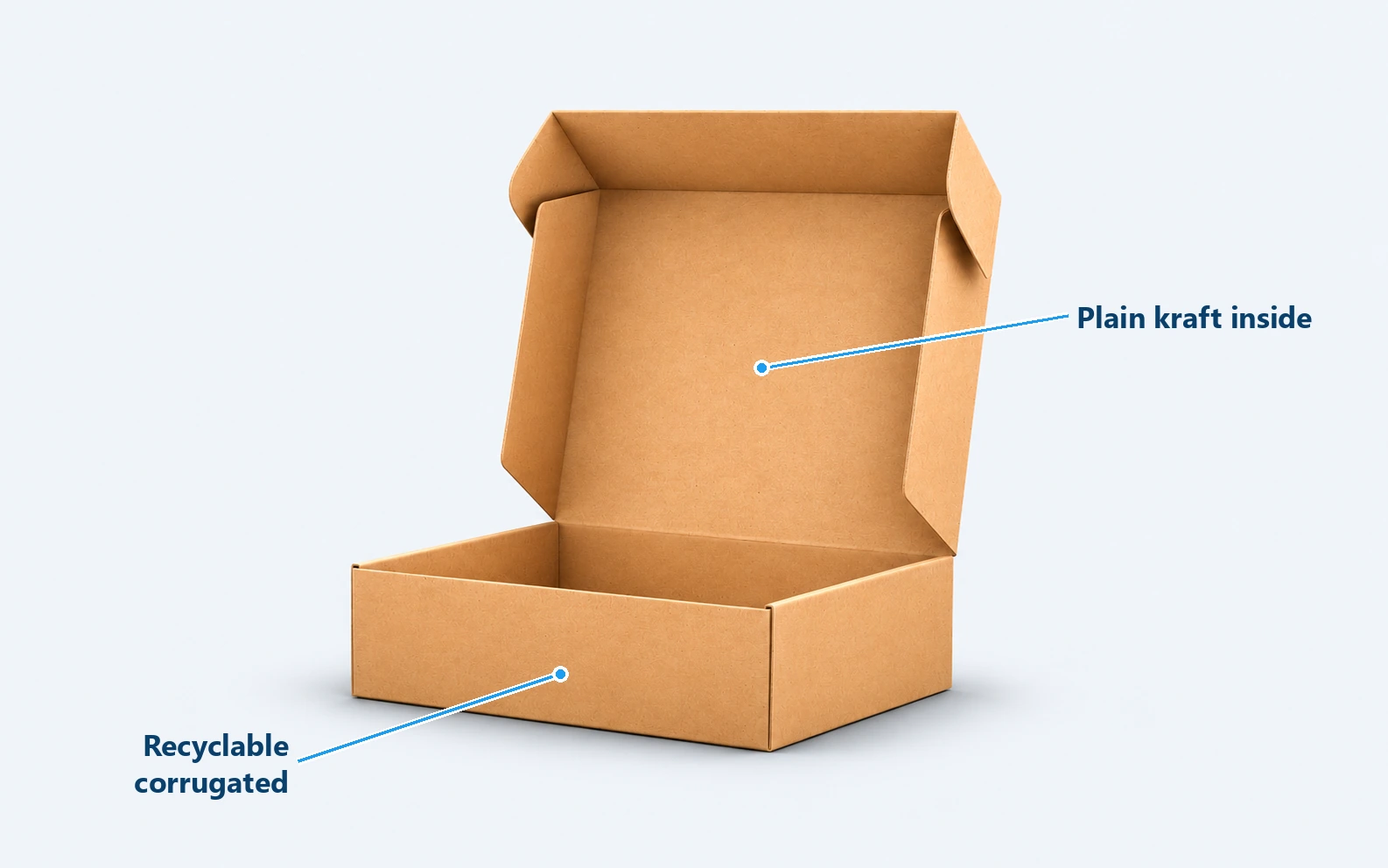
| Recycled corrugated board | Recycled cardboard fiber with a fluted middle layer | Widely recyclable | Shipping and mailer boxes | About the same |
| FSC-certified board | Wood from forests certified by the Forest Stewardship Council | Recyclable | Any printed box | Often slightly higher |
| Post-consumer recycled (PCR) content | Paper or plastic that consumers already used and recycled | Depends on the base material | Boxes, bags, mailers | About the same to slightly higher |
| Compostable mailers and films | Plant-based film | Home or industrial compost, depending on the certificate | Clothing, soft goods, coffee, snacks | Higher than plastic |
| Reusable packaging | Sturdy board or other durable material | Used again before it’s recycled | Kits, gift boxes, subscription items | Higher per piece, lower over many uses |
| Plastic-free finishes and soy or water-based inks | Not a material, but a way of printing and finishing | Keep a paper box recyclable | Any box | Little or no difference |
Costs are a general guide. Your real price depends on size, print and order quantity.
Kraft paperboard
Kraft is the brown board you’ve seen on candle boxes and soap boxes. It’s strong for its weight, it takes printing well, and it reads as “natural” to shoppers. Left uncoated, it can go in the paper recycling or a compost pile. Packlic’s eco-friendly kraft boxes use uncoated recycled kraft board. The wider custom kraft boxes range covers more styles.
Recycled corrugated board
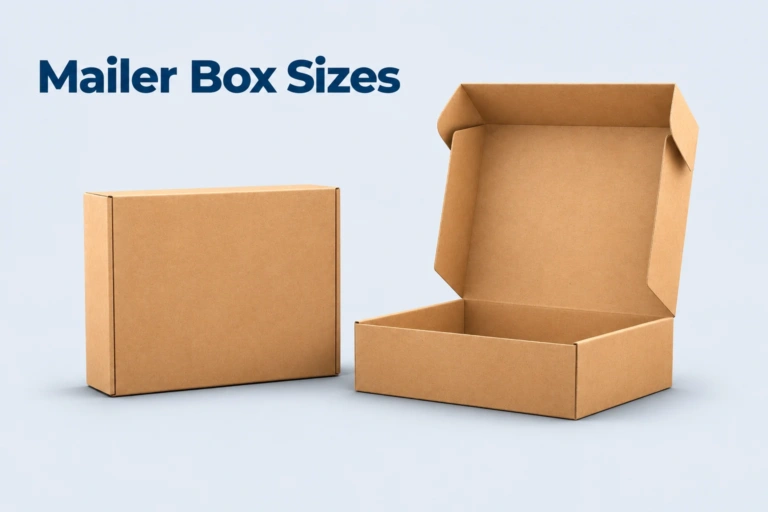
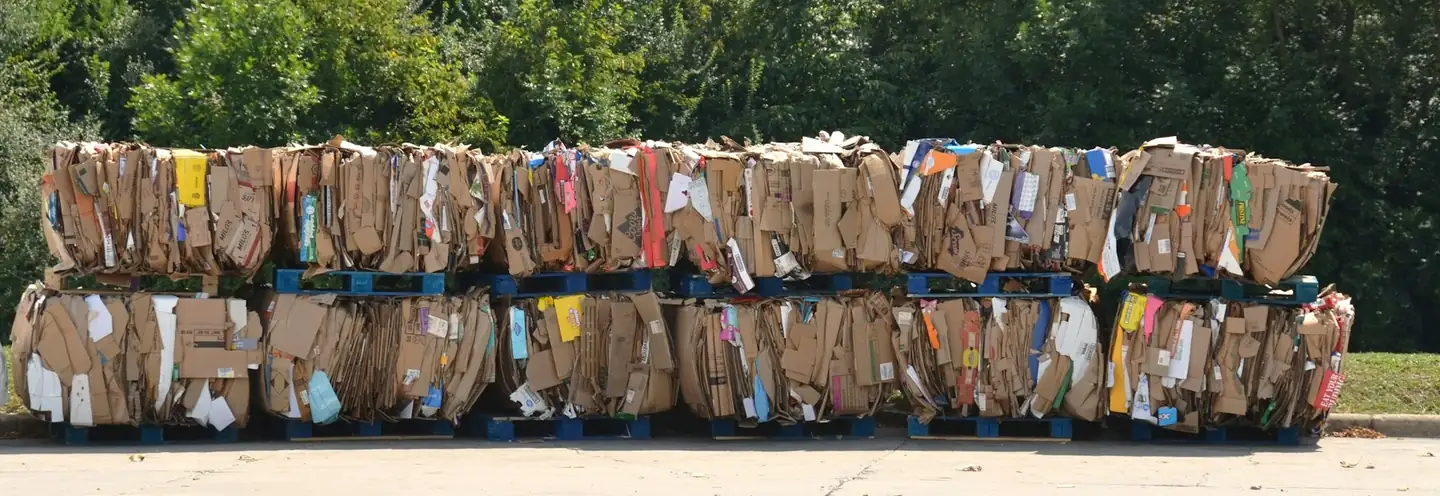
Corrugated board is what shipping boxes are made of: two flat sheets with a wavy layer in between. It’s the most recycled packaging in the US. The EPA reports that 96.5% of corrugated boxes were recycled in 2018. For shipping, a corrugated mailer box is the easiest eco upgrade most brands can make. Kraft mailer boxes keep the natural brown look.
FSC-certified board
FSC stands for the Forest Stewardship Council. Its label means the wood fiber came from forests managed to FSC rules. It also means the material was tracked from the forest to the finished box. It’s one of the few eco labels with a real, checkable system behind it.
Post-consumer recycled (PCR) content
Post-consumer recycled (PCR) content is material people already used and put in a recycling bin. It was then made into something new. It’s different from factory scrap. A “30% PCR” label tells you how much of the package came from that recycled stream. Ask your supplier for the exact percentage, not just “recycled.”
Compostable mailers
Compostable mailers replace plastic poly mailers with a plant-based film. Look for named certificates. EN 13432 is the European standard and ASTM D6400 is the North American one. Both cover industrial composting. Some films are also certified for home composting. Packlic’s compostable mailers carry both EN 13432 and ASTM D6400 certification, with home and industrial options. For coffee and snacks, there are also biodegradable mylar bags made with a plant-based barrier.
Reusable packaging
The greenest box is often one your customer keeps. A sturdy box with a lid or handle can store tools, gifts or supplies for years. Take our ZOLL Itamar toolkit box. The brief was a box a clinic would keep on the desk. It’s built from printed corrugated board, so it still recycles at the end.
Paper vs plastic
Paper wins on recycling. In 2018, the US recycled 80.9% of paper and paperboard packaging, according to the EPA. Only 13.6% of plastic containers and packaging were recycled. Plastic can still make sense where moisture or a long shelf life matter. For bags, though, paper is usually the easier eco choice. Our custom paper bags page covers the styles. Our paper bag supplier checklist explains what to ask before you order.
What are eco-friendly alternatives to bubble wrap and packing peanuts?
The best eco-friendly swaps for bubble wrap are made of paper. Try honeycomb paper wrap, crinkle paper or molded pulp. Biodegradable packing peanuts made from plant starch replace foam peanuts and dissolve in water. The cheapest fix is a right-sized box, which needs little or no fill at all.
- Honeycomb or kraft paper wrap. Cushions items like bubble wrap and goes in the paper recycling.
- Crinkle paper and paper fill. Fills gaps and looks good in a gift box.
- Starch-based packing peanuts. Made from corn or other plant starch. They dissolve in water, so customers can rinse them away or compost them.
- Molded pulp. Pressed paper fiber shaped around the product, like an egg carton.
- Paperboard inserts. A die-cut insert holds a product in place, so nothing rattles. See our bottle and product inserts.
What are some eco-friendly packaging examples?
Here are common eco-friendly packaging examples. Kraft boxes suit cosmetics and soap. Corrugated mailers suit online orders. Compostable mailers suit clothing, and paper bags suit retail. Food brands use kraft take-out boxes and compostable cups. Each one swaps plastic or mixed materials for paper or certified compostable film.
| Product | Eco-friendly packaging idea | Packlic option |
|---|---|---|
| Cosmetics and skincare | Uncoated kraft box with soy-based ink | Eco-friendly kraft boxes |
| Online orders | Right-sized corrugated mailer, no outer box | Mailer boxes |
| Clothing and soft goods | Compostable mailer instead of a poly bag | Compostable mailers |
| Retail and gifts | Kraft paper bag with paper handles | Brown paper bags |
| Takeout food | Kraft take-out box | Kraft take-out boxes |
| Coffee shops | Compostable paper cups | Compostable coffee cups |
| Coffee beans and snacks | Plant-based barrier pouch | Biodegradable mylar bags |
Here’s a real one. The Crystal & Co training package is a printed corrugated mailer. It’s strong enough to ship on its own. No extra outer box is needed, which means one less layer of packaging.
Does eco-friendly packaging cost more?
Sometimes, but less often than people think. Paper options, like kraft and recycled corrugated board, usually cost about the same as standard packaging. Newer materials, such as compostable films, cost more per unit. Right-sizing and dropping plastic parts can even lower your total cost. Smaller boxes cost less to ship.
- Paper options usually cost about the same. Kraft and corrugated board are everyday materials.
- Specialty materials cost more. Compostable films and mushroom-based packaging cost more per unit.
- Some changes save money. Dropping a plastic window or laminate removes a production step. A right-sized box uses less board. Carriers often charge by box size as well as weight. So a smaller box can lower shipping costs too.
- Small runs can cost more per piece. Ordering only what you need still beats throwing away old stock.
| Pros | Cons | |
|---|---|---|
| Paper and kraft | Low cost, widely recyclable, prints well | Weak against water and grease unless coated |
| Recycled corrugated | Strong, cheap, most recycled packaging in the US | Bulky for very small items |
| Compostable film | Replaces plastic mailers and pouches | Costs more, needs the right compost setup |
| Reusable packaging | Kept and used again, feels premium | Higher price per piece |
The honest answer: switching your shipping box to recycled corrugated rarely raises costs. Switching to compostable film usually does, so test it on one product first.
How can you tell real eco claims from greenwashing?
Greenwashing means making a product sound greener than it is. To spot it, check four things. Is the claim specific? Does it cover every part? Can customers really recycle or compost it? And is there proof, such as an FSC or ASTM D6400 certificate? The FTC’s Green Guides set these rules for US brands.
The Green Guides (16 CFR Part 260) explain how green claims should be made. You can use them to check any supplier’s claims, and your own.
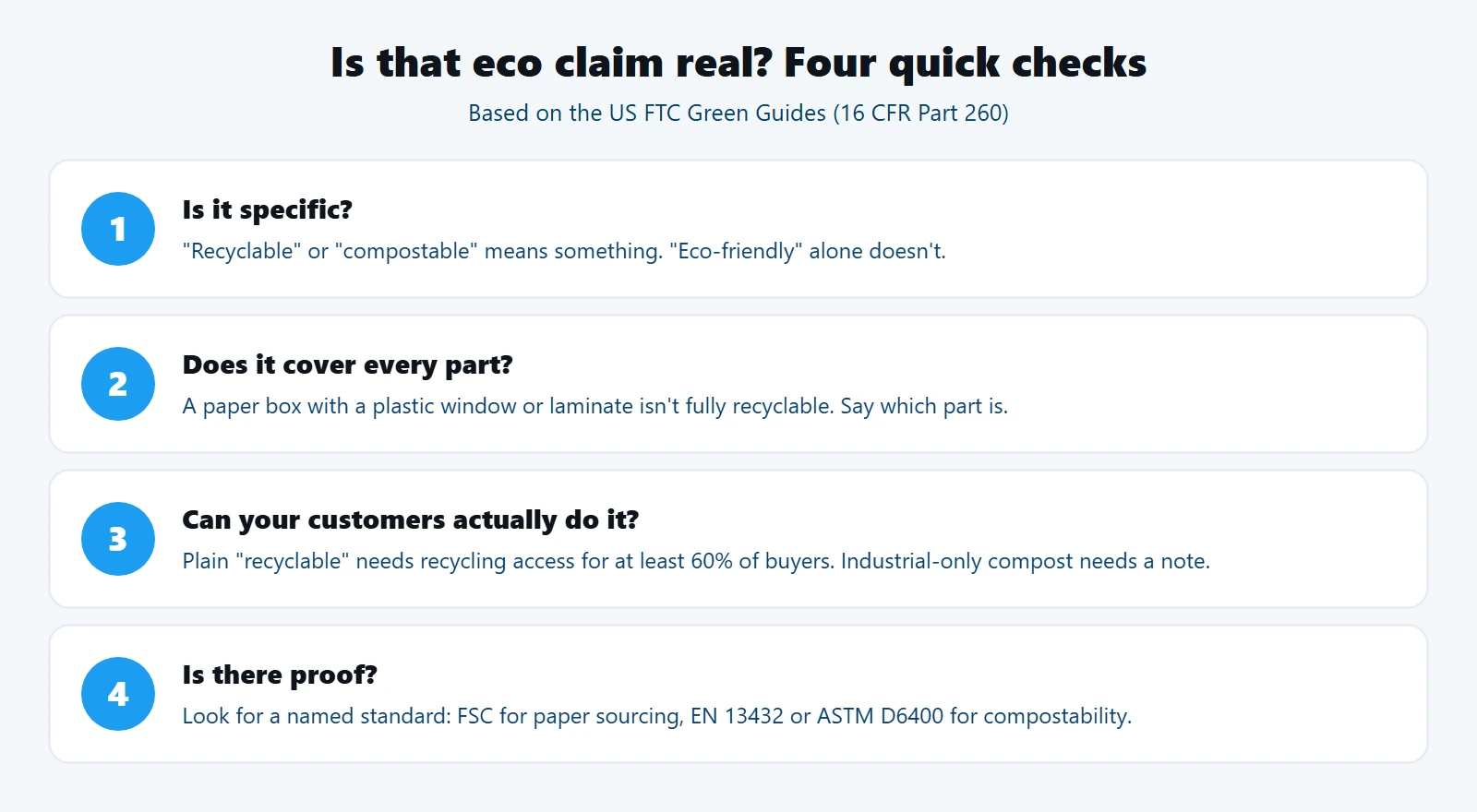
- Is it specific? “Eco-friendly” alone is too vague. “Recyclable” or “home compostable” tells people something.
- Does it cover every part? A paper box with a plastic window isn’t fully recyclable. Say which part is.
- Can your customers actually do it? The FTC sets a 60% rule. You can only call something “recyclable” without a note if 60% of buyers can recycle it locally. Items that only compost in industrial facilities need a note saying so.
- Is there proof? Look for a named standard. FSC covers paper sourcing. EN 13432 and ASTM D6400 cover compostability.
How can a small business switch to eco-friendly packaging?
A small business can switch to eco-friendly packaging in six steps. Start with a right-sized recycled shipping box, remove hidden plastic, and pick one claim you can prove. Then ask for certificates, order only what you need, and tell customers how to dispose of the package. You don’t need to change everything at once.
- Start with your shipping box. Move to a right-sized, recycled corrugated mailer. It’s the biggest piece of packaging most customers receive.
- Remove hidden plastic. Swap plastic laminates for uncoated or water-based finishes and drop plastic windows. Use paper tape and paper fill instead of plastic tape and bubble wrap.
- Pick one claim you can prove. Try “FSC-certified board” or “recyclable with cardboard.” Print it on the box with a clear disposal note.
- Choose certified materials. Ask your supplier for the FSC, EN 13432 or ASTM D6400 paperwork.
- Order what you need. Packlic’s eco-friendly boxes and compostable mailers start at 100 units. That suits small launches.
- Tell customers what to do. A line like “Flatten and recycle with cardboard” beats a big green leaf logo.
FAQ
What is the most eco-friendly packaging?
For most products, the greenest packaging is recycled paper or cardboard with no plastic coating. Customers can put it straight into their recycling bin. Using less packaging by right-sizing the box helps just as much.
What is the cheapest eco-friendly packaging?
The cheapest eco-friendly packaging is usually a right-sized box in recycled corrugated board or plain kraft. These everyday paper materials cost about the same as standard packaging. A snug fit also cuts filler and shipping costs.
Is kraft paper eco-friendly?
Yes, in most cases. Kraft paper is made from wood fiber, often with recycled content. Uncoated kraft is both recyclable and compostable. A plastic laminate or window takes that benefit away.
Can biodegradable packaging be recycled?
It depends on the material. Paper and cardboard that biodegrade can also be recycled. Biodegradable or compostable plastic films can’t go in the recycling bin, because they contaminate the plastic stream. Check the label for disposal instructions.
Can compostable packaging go in the recycling bin?
No. Compostable films can contaminate paper and plastic recycling. They belong in a compost pile or an industrial composting facility, depending on how they’re certified.
Is eco-friendly packaging more expensive?
Paper-based eco-friendly packaging, like kraft and recycled corrugated, usually costs about the same as standard board. Newer materials such as compostable films cost more per unit. Right-sizing can offset the difference.
What does FSC-certified mean?
FSC-certified means the wood fiber came from forests managed to Forest Stewardship Council rules. The material was also tracked through every step to the finished product.
Where can a small business get eco-friendly packaging?
Look for a supplier that shows its certifications and offers low minimums. Packlic’s sustainable packaging range starts at 100 units for several eco styles.
Ready to make the switch?
Start with one product and one honest claim. If you’d like help choosing materials, explore Packlic’s sustainable packaging range and request a free quote. Our team sends real pricing within 24 hours, along with a free 3D mockup.
Sources
- US Federal Trade Commission, Guides for the Use of Environmental Marketing Claims (Green Guides), 16 CFR Part 260, sections 260.7 (compostable), 260.8 (degradable) and 260.12 (recyclable): ecfr.gov
- US Environmental Protection Agency, Containers and Packaging: Product-Specific Data (2018 figures): epa.gov
- Forest Stewardship Council: fsc.org