What Are Mylar Bags? Layers, Uses and Sizes Explained
Mylar bags are flexible pouches made from layers of plastic film bonded to a thin metal barrier, usually aluminum foil or a metallized coating. That barrier blocks light, oxygen and moisture, the three things that make food, coffee and supplements go stale. It is why mylar is used for long-term food storage and for premium retail packaging.
What is a mylar bag, exactly?
A mylar bag is a pouch made from BoPET polyester film laminated with a metal barrier and a sealable inner layer. “Mylar” began as a brand name for that polyester film. Today, people use the word for almost any shiny, foil-lined storage pouch, whether it holds rice, coffee or snacks.
BoPET is short for biaxially oriented polyethylene terephthalate. That sounds complicated, but it just means a clear plastic film that was stretched in two directions while warm. The stretching makes it tough, smooth and hard to tear.
So when someone says mylar bag today, they almost always mean a pouch with several layers bonded together, not a single sheet of film.
What are mylar bags made of?
Mylar bags are made of three bonded layers. The outer layer is PET film, which carries the print. The middle layer is aluminum foil or a metallized film, which blocks light, oxygen and moisture. The inner layer is polyethylene (PE), a food-safe plastic that melts when heated to seal the bag shut.
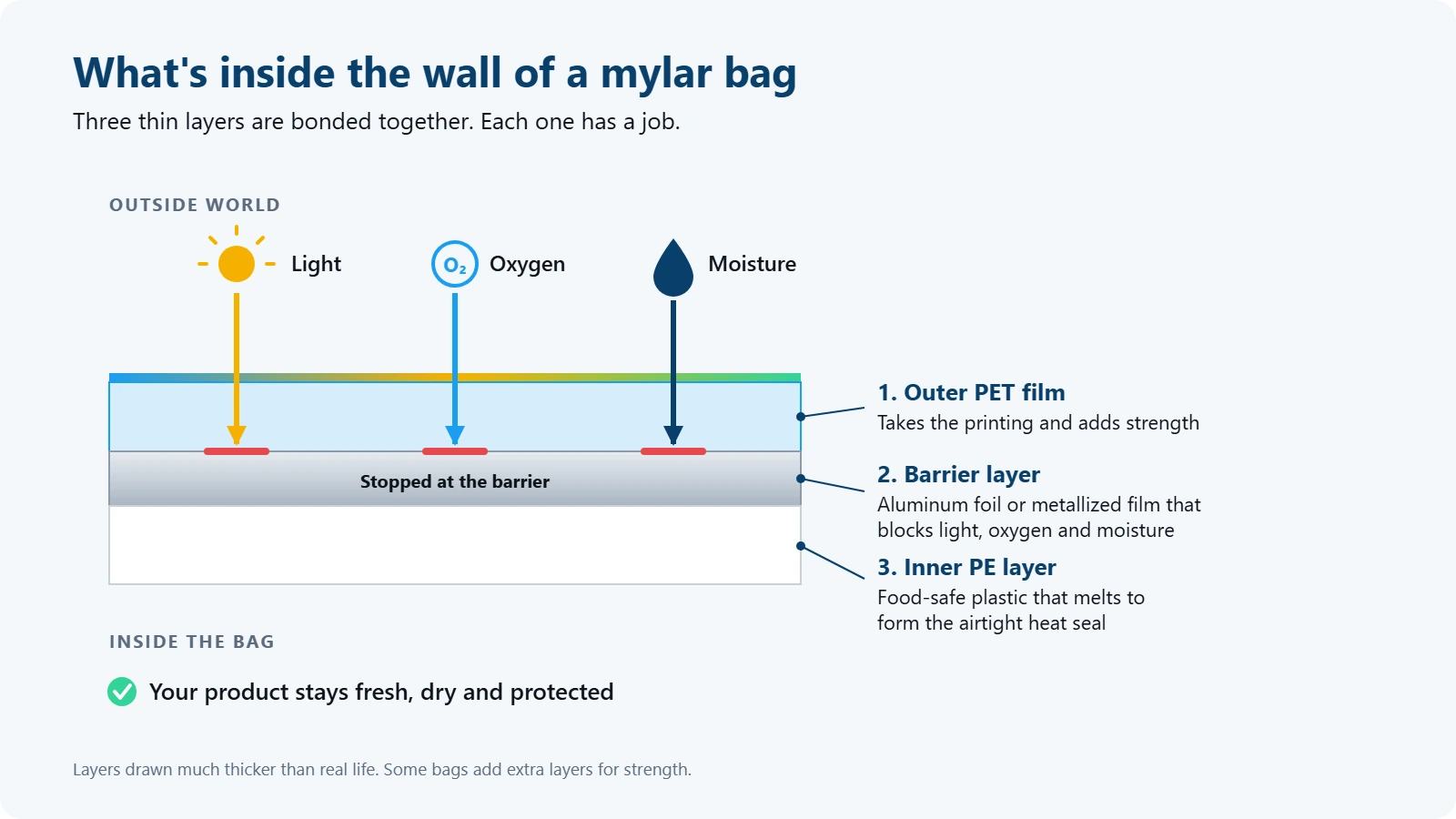
- Outer PET film. This is the layer you see and touch. It carries the printed design and gives the bag strength.
- Barrier layer. This is the part that does the protecting. It is either a very thin sheet of aluminum foil or a metallized film, which is plastic coated with a microscopic layer of aluminum.
- Inner PE layer. PE (polyethylene) is a soft, food-safe plastic. When heated, it melts and fuses together, which is how the bag gets sealed shut.
The barrier layer is the main difference between bags. Here is how the two common types compare:
| Aluminum foil barrier | Metallized film barrier | |
|---|---|---|
| What it is | A real sheet of thin aluminum | Plastic film with a microscopic aluminum coating |
| Blocks light | Fully | Almost fully |
| Blocks oxygen and moisture | Best | Very good |
| Feel | Stiffer, crinkles more | Softer, more flexible |
| Cost | Higher | Lower |
| Best for | Long-term food storage, sensitive products | Snacks, coffee, everyday retail |
Quick test: hold the bag up to a bright light. A foil bag lets no light through. A metallized bag may show a faint glow.
Some mylar bags also have a clear window on the front so shoppers can see the product. A window looks great on a shelf, but it lets light in. That makes mylar bags with a window a retail choice, not a long-term storage choice.
What are mylar bags used for?
Mylar bags are used to protect products that spoil when they meet air, light or damp. The biggest uses are long-term food storage, coffee and tea, snacks and candy, supplements and pet treats. Brands also use them because the outer film prints in full color, so one bag both protects and sells the product.
- Long-term food storage. Dry foods like white rice, dried beans, oats and pasta are packed with an oxygen absorber, then heat sealed. Our mylar food storage bags are made for exactly this.
- Coffee and tea. Fresh coffee loses its flavor fast once oxygen gets in. Coffee bags often add a one-way valve, which lets the gas from freshly roasted beans escape without letting air back in. See our custom coffee bags.
- Snacks and candy. Mylar keeps chips, jerky, cookies and gummies crisp or soft, the way they left the kitchen.
- Supplements and powders. Protein powder, vitamins and herbal blends stay dry and potent.
- Pet treats. The tough film stands up to oily, chunky treats and keeps smells in.
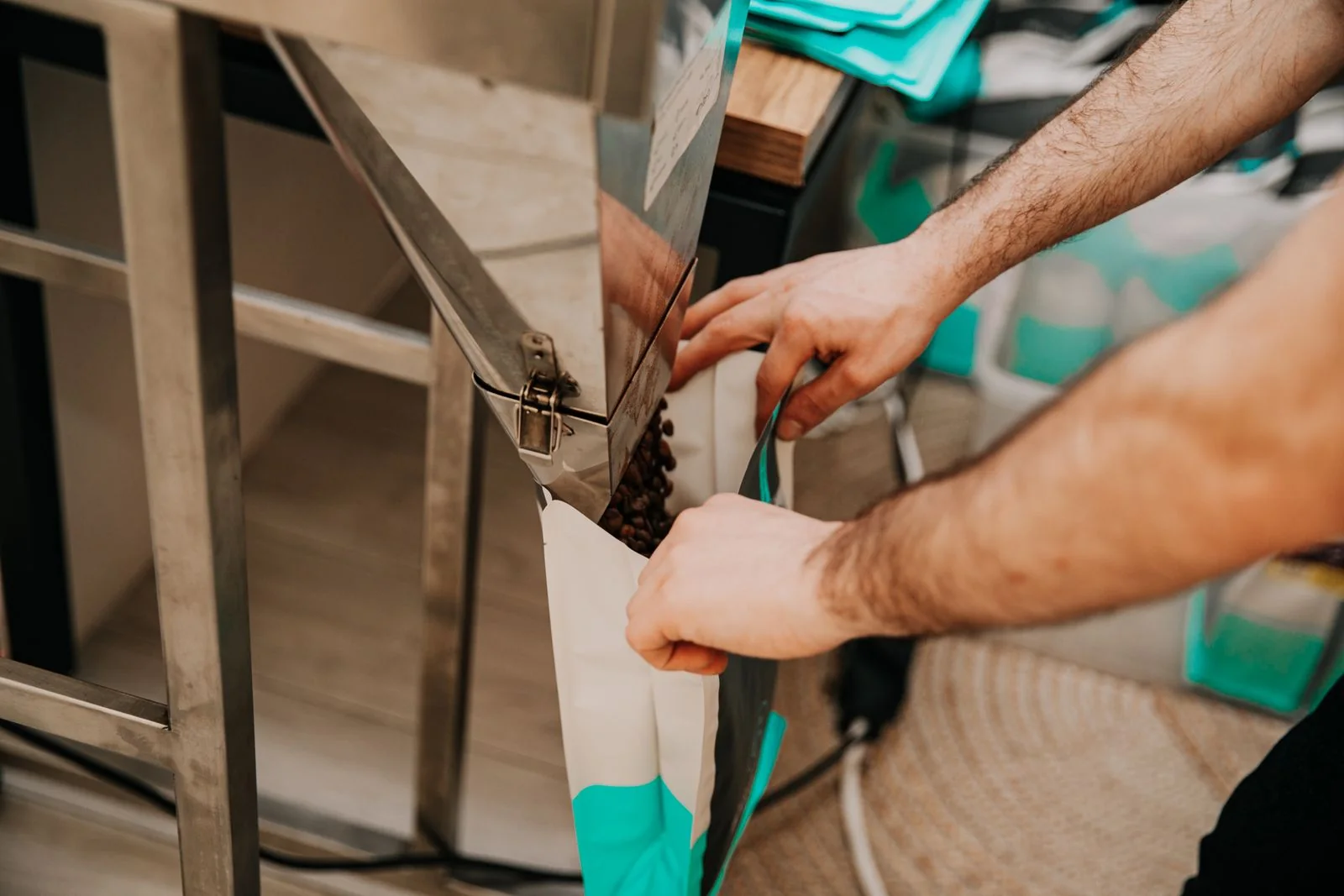
What not to store in mylar bags: moist foods like fresh meat, cheese and soft baked goods are a poor match for long-term storage. So are fatty foods like nuts and brown rice. Moist food can grow bacteria, and fatty food turns rancid over time, even in a sealed bag.
How do oxygen absorbers work with mylar bags?
An oxygen absorber is a small packet of iron powder that soaks up the oxygen left inside a sealed mylar bag. The mylar wall stops new oxygen from getting in, and the absorber removes what is already there. Together they slow staling, stop most pantry bugs and help dry food keep for years.
The absorber only works if the bag is sealed soon after you open the packet. Air starts using it up right away. So work in small batches and keep spare absorbers in a sealed jar.
Absorbers are sold by capacity, in cubic centimeters (cc). Bigger bags and airier foods, like pasta, need more. Many food storage guides suggest about 300 cc per gallon of dry food, but always follow the chart from the maker of your absorbers.
Absorbers are for dry foods only. Food with more than about 10% moisture can be unsafe in a low-oxygen bag, because some harmful bacteria grow without air.
How do you seal a mylar bag?
You seal a mylar bag with heat. Fill the bag, add an oxygen absorber if you are storing food, press out the extra air, then run a heat sealer across the top. The heat melts the inner PE layer so both sides fuse into one airtight seam. A good seal is flat, smooth and has no wrinkles.
- Fill the bag, leaving about 2 to 3 inches empty at the top for the seal.
- Add the absorber and press out as much air as you can.
- Seal it. An impulse sealer is the easiest tool. A clothes iron or hair straightener on a high setting also works on most bags.
- Check the seal. Pull gently on both sides of the seam. If it peels or has gaps, seal again just below it.
- Label it with the contents and the date.
Bags with a zipper still need a heat seal for long-term storage. The zipper is handy for daily use, but it is not airtight over the years. Packlic also makes heat seal mylar bags designed for clean, strong seams.
Mylar bags vs vacuum sealing: which is better?
Mylar bags are better for long-term storage, and vacuum seal bags are better for the fridge or freezer. A vacuum bag is clear plastic, so light gets in and oxygen slowly passes through the film. A sealed mylar bag with an oxygen absorber blocks light and oxygen for years, which suits rice, beans and other dry staples.
| Mylar bag + oxygen absorber | Plain vacuum seal bag | |
|---|---|---|
| Blocks light | Yes | No, it’s clear |
| Blocks oxygen over time | Yes, very well | Slowly lets oxygen through |
| Best for | Dry food for years, coffee, retail products | Meat, cheese and leftovers in the freezer |
| Puncture resistance | High, up to 7 mil | Lower |
| Shows the food inside | No (unless it has a window) | Yes |
You can also combine both. Some mylar bags have a textured inner surface, so they work with home vacuum sealers. See our mylar vacuum seal bags.
How thick should a mylar bag be?
Mylar bag thickness is measured in mil, and one mil is one thousandth of an inch, about 25 microns. Most retail bags are 3 to 5 mil. Long-term food storage usually calls for 5 mil or more, and sharp foods like pasta need 7 mil. For comparison, printer paper is about 4 mil thick.
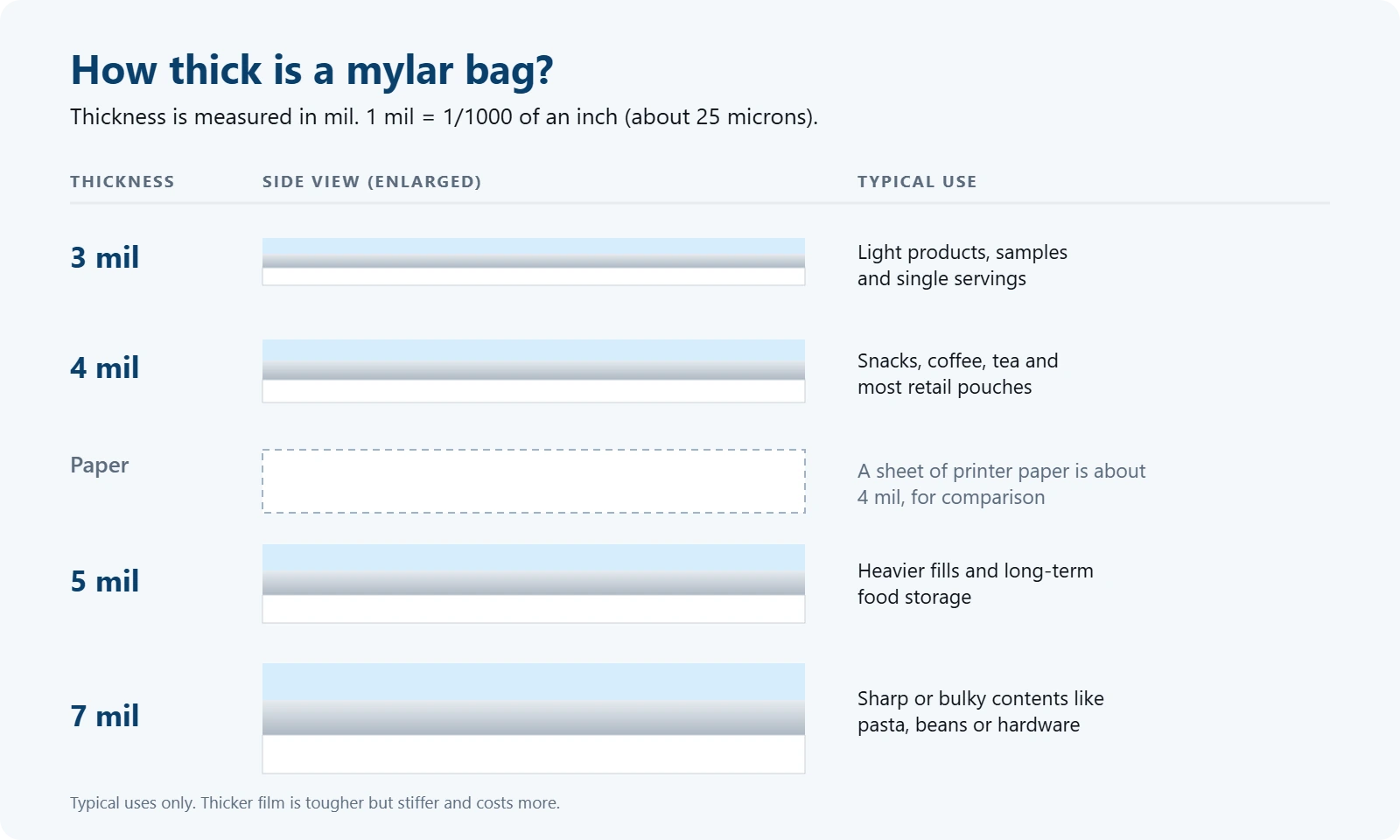
A thicker bag is tougher and harder to puncture. But it is also stiffer and costs more, so thicker is not always better. As a rough guide:
- 3 mil: light products, samples and single servings
- 4 mil: snacks, coffee, tea and most retail pouches
- 5 mil: heavier fills and long-term food storage
- 7 mil: sharp or bulky contents like pasta, beans or small hardware
At Packlic we make mylar bags from 3 to 7 mil, so you can match the film to what goes inside.
What sizes do mylar bags come in?
Mylar bags come in sizes from small 3 × 4.5 inch sample pouches up to 20 × 30 inch bags that line a 5-gallon bucket. The most common food storage sizes are quart (about 8 × 12 inches) and 1 gallon (about 10 × 14 inches). Retail bags are often made to a custom size that fits the product.
Sizes vary from one maker to another, so treat these as typical examples:
| Size | Approximate dimensions | Holds about | Good for |
|---|---|---|---|
| Sample pouch | 3 × 4.5 in | 1 gram | Samples, single servings |
| Quart | 8 × 12 in | 1 quart (4 cups) | Small batches of dry food |
| 1 gallon | 10 × 14 in | 1 gallon (16 cups) | Rice, beans, flour |
| 5 gallon | 20 × 30 in | Lines a 5-gallon bucket | Bulk food storage. See 5 gallon mylar bags |
For retail products, the right size depends on your product and fill weight more than on a standard chart. A custom size that fits your product snugly looks better on a shelf and wastes less material.
Flat, stand-up or gusset: which style do you need?
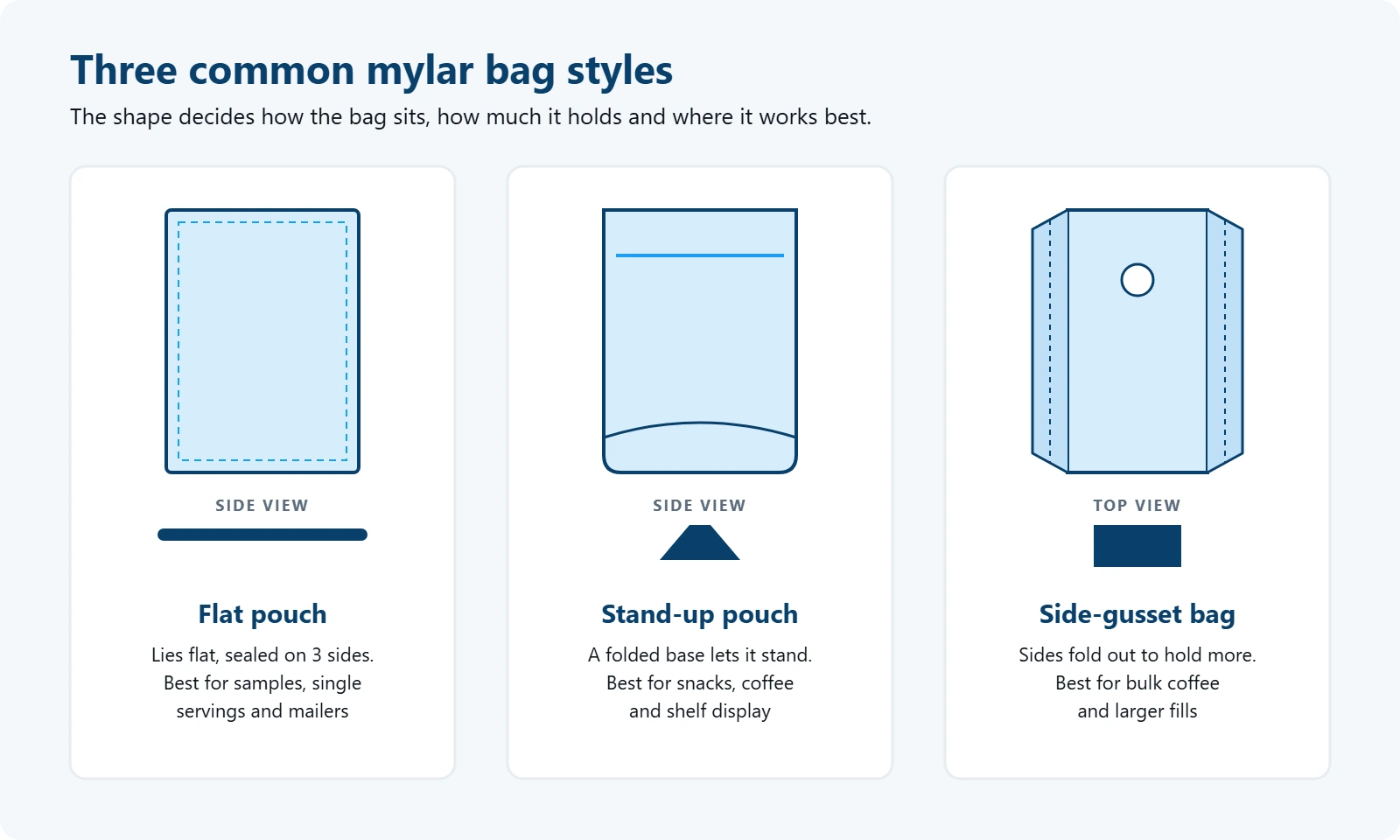
The shape of the bag decides how it sits, how much it holds and where it works best.
| Style | How it works | Best for |
|---|---|---|
| Flat pouch | Two panels sealed on three sides, lies flat | Samples, single servings, mailers |
| Stand-up pouch | A folded bottom (called a gusset) opens up so the bag stands on its own | Snacks, coffee, anything sold on a shelf |
| Side-gusset bag | The sides fold out to hold more | Bulk coffee and larger fills |
Stand-up pouches are the most popular choice for retail because they stand tall and show off the printed front. Learn more about our stand-up mylar bags.
What features can you add to a mylar bag?
Most features are optional. Pick the ones that make sense for your product and your customer.
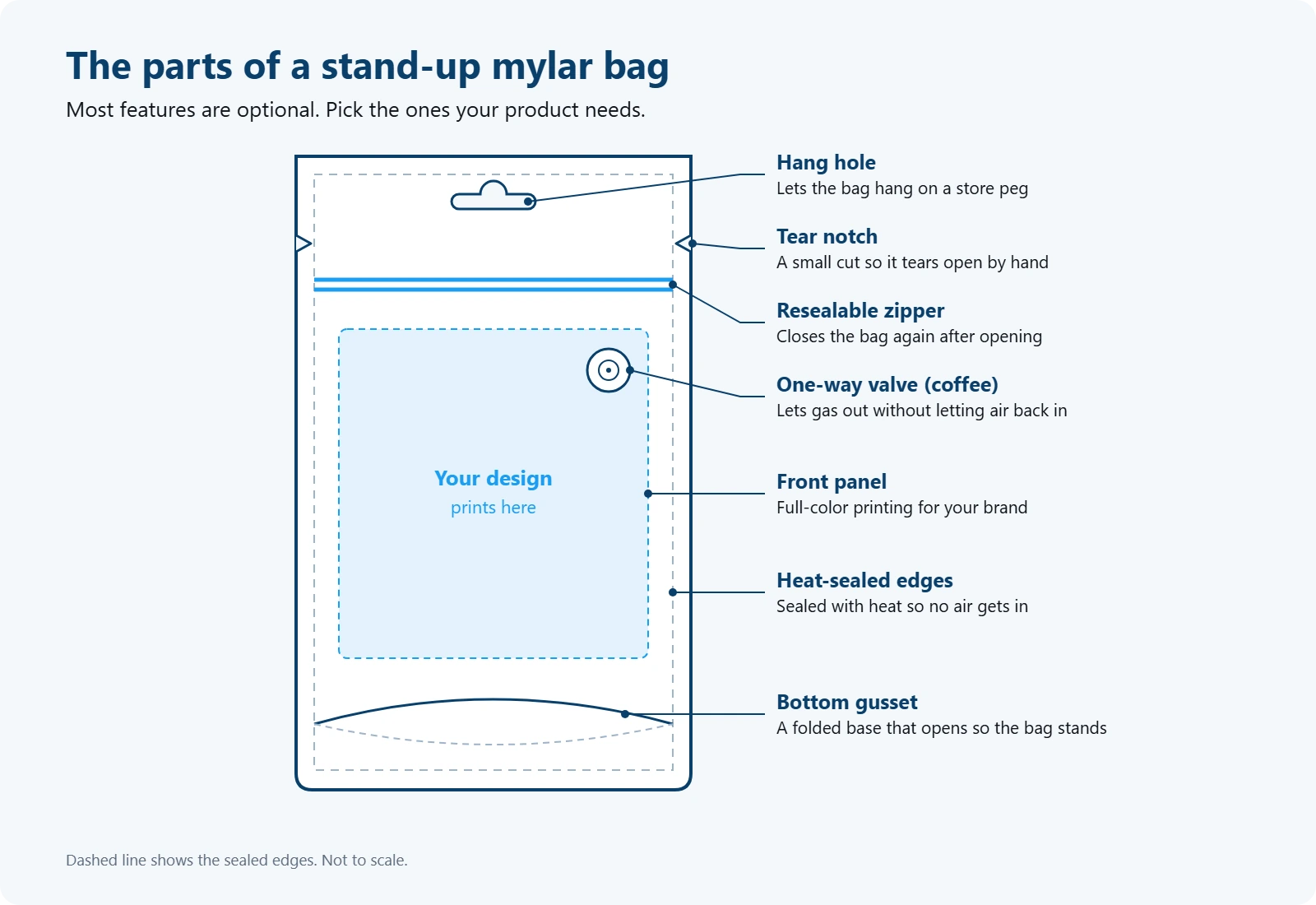
- Resealable zipper: lets customers close the bag again after opening. See our mylar ziplock bags. Child-resistant zippers are also available for products that need them.
- Tear notch: a tiny cut near the top so the bag tears open cleanly by hand.
- Hang hole: lets the bag hang on a store peg.
- One-way valve: for coffee, lets gas out without letting air back in.
- Window: a clear panel that shows the product, best for retail rather than storage.
Can mylar bags be custom printed?
Yes. Mylar bags can be custom printed in full color from edge to edge, because the outer PET layer takes ink well. Finishes include matte, gloss and soft-touch. Small runs are printed digitally, with no setup cost, while large runs of one design use rotogravure cylinders for a lower price per bag.
| Digital printing | Rotogravure printing | |
|---|---|---|
| How it works | Prints straight from your file, like a large inkjet | Uses engraved metal cylinders, one per color |
| Setup cost | None | Cylinders are made for each design |
| Best for | Small runs, several designs, quick tests | Large runs of one design |
| Cost per bag | Higher | Lower at high volume |
Packlic offers both, with custom mylar bags starting at 100 bags and production in 7 to 10 days.
Frequently asked questions
Are mylar bags smell-proof?
A mylar bag with a strong heat seal holds in most smells, because the foil barrier blocks odor molecules. Zippers leak a little more than heat seals. Thicker film and a foil barrier give the best smell protection.
Are mylar bags toxic or safe for food storage?
Mylar bags made for food are safe for dry food storage. The inner layer that touches the food is a food-grade plastic. When you buy bags for food, ask the supplier to confirm the inner layer is approved for food contact. Avoid heating food in a bag that is not rated for it.
How long do mylar bags keep food fresh?
Sealed with an oxygen absorber and kept cool and dry, mylar bags can keep dry staples like white rice and dried beans for many years. Many food storage guides estimate 20 years or more. The real shelf life depends on the food, the storage temperature and the seal.
Are mylar bags reusable?
Yes, most mylar bags can be reused. Zipper bags open and close many times. A heat-sealed bag can be cut open just below the seal and sealed again, as long as there is enough bag left. Wash and fully dry a bag before you refill it with food.
Are mylar bags airtight and waterproof?
A properly heat-sealed mylar bag is airtight and keeps out water and moisture. The seam is the weak point, so check it after sealing. A zipper alone is not fully airtight, which is why long-term storage bags are heat sealed.
Can you put mylar bags in the freezer?
Yes. Mylar film handles freezer temperatures well, and it is common for freeze-dried food. Let the food come to room temperature before you open the bag, so moisture does not form inside.
Are mylar bags recyclable?
Most mylar bags are hard to recycle in curbside bins, because they are made of mixed layers of plastic and metal. If that matters for your brand, ask about kraft mylar bags for a natural look, or compostable pouch options.
Ready to design your own mylar bags?
Mylar bags keep your product fresh and give your brand a big, printable surface to work with. Browse our custom mylar bags to compare styles, thicknesses and finishes, then request a quote for the size you need.